
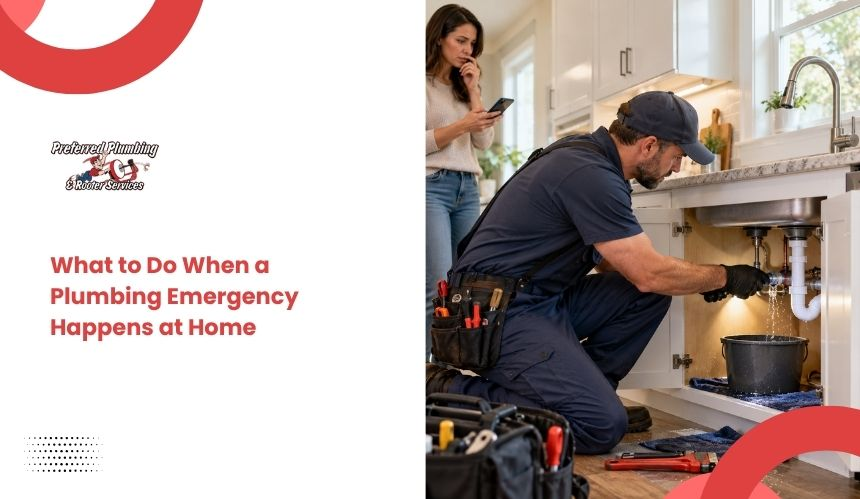
- perferred
What to Do When a Plumbing Emergency Happens at Home
A burst pipe, an overflowing toilet, or a sewer backup rarely announces itself ahead of time. One minute everything is normal, and the next you’re standing in an inch of water wondering what to do first. Knowing how to respond in those first few minutes can mean the difference between a minor inconvenience and thousands of dollars in water damage.
This guide walks you through exactly what to do when a plumbing emergency strikes, how to tell a true emergency from something that can wait until morning, and when it’s time to pick up the phone and call a licensed plumber.
How to Recognize a True Plumbing Emergency
Not every plumbing issue requires an after-hours call. A slow drip under the sink can usually wait until business hours, but certain warning signs mean you need help immediately. Water actively flooding a room, sewage backing up into tubs or floor drains, a complete loss of water pressure throughout the house, or the smell of gas near a water heater are all situations that qualify as true emergencies. If left unaddressed, these problems can compromise drywall, flooring, electrical systems, and even the structural integrity of your home.
Immediate Steps to Take Before Help Arrives
The actions you take in the first five to ten minutes of a plumbing emergency often determine how much damage your home sustains. Staying calm and working through a short checklist will protect both your property and your safety.
Shut Off the Water Supply
Every homeowner should know the location of their main water shutoff valve before an emergency ever happens. For an isolated fixture leak, such as under a sink or behind a toilet, shutting off the local supply valve may be enough. For a burst pipe or whole-house flooding, shut off the main valve immediately, which is typically located near the water meter, in the garage, or along an exterior wall facing the street.
Protect Your Home from Water Damage
Once the water is off, turn off electricity to the affected area if water is anywhere near outlets or appliances. Move furniture, electronics, and valuables away from standing water, and use towels, a wet vacuum, or buckets to remove as much water as possible. Open windows and run fans to begin drying the area while you wait for a plumber, since mold can begin developing within 24 to 48 hours of water exposure.
Common Plumbing Emergencies Pomona Homeowners Face
Plumbing emergencies look a little different depending on where you live, and Pomona’s mix of older housing stock and warm, dry climate creates some predictable patterns. In established neighborhoods near the Historic Arts Colony and parts of Lincoln Park, many homes still have original galvanized steel supply lines or aging clay sewer laterals from decades past, both of which are prone to corrosion, root intrusion, and sudden failure. Mature ficus and sycamore trees common throughout these older streets send roots directly into sewer joints, which is one of the leading causes of sudden sewer backups in the area.
Seasonal Factors That Trigger Emergencies
Pomona’s hot, dry summers cause soil beneath homes to shift and contract, which puts stress on slab foundations and can lead to slab leaks that show up as unexplained wet spots on flooring or a spike in the water bill. In contrast, the region’s winter rains can quickly overwhelm older sewer lines, particularly in low-lying areas near the San Jose Creek channel, leading to backups that show up first as gurgling drains or slow-draining tubs. Homes in newer developments like Phillips Ranch tend to have more modern plumbing, but they are not immune to water heater failures and pressure-related pipe bursts during temperature swings.
Should You Attempt a DIY Fix or Call a Plumber?
A plunger and a little patience can resolve a simple clogged toilet, and tightening a loose supply line fitting is well within most homeowners’ skill level. However, many people searching for how to fix a plumbing emergency themselves end up making the problem worse by using chemical drain cleaners, over-tightening fittings, or attempting repairs on pressurized lines without the right tools. If water keeps returning after you’ve cleared a clog, if you notice sewage odor, or if a leak is coming from inside a wall or ceiling, it’s time to call a professional rather than risk further damage.
What Happens When You Call an Emergency Plumber
When you call a licensed emergency plumbing service, a dispatcher will typically ask a few quick questions about the issue, such as whether the water is shut off and how severe the leak or backup appears. This helps the company send a technician equipped with the right tools and parts for your specific situation, whether that’s a video sewer inspection camera for a suspected root intrusion or a hydro-jetting unit for a stubborn clog. Most reputable companies offer true 24/7 emergency response, since burst pipes and sewer backups rarely wait for convenient business hours.
How to Prevent Future Plumbing Emergencies
While not every plumbing emergency can be predicted, routine maintenance significantly lowers the odds of a middle-of-the-night disaster. Scheduling an annual sewer camera inspection is especially valuable for older homes with clay or cast iron lateral lines, as it can catch root intrusion or cracking before it causes a full backup. Replacing aging galvanized supply lines, insulating exposed pipes, and having your water heater inspected every year or two are all practical steps that reduce the likelihood of an emergency call in the first place.
If you’re dealing with a plumbing emergency right now or simply want to be prepared before one happens, Preferred Plumbing and Rooter Services provides a full range of plumbing services throughout the region, with fast, reliable response when homeowners need it most.
Frequently Asked Questions
What qualifies as a plumbing emergency versus a regular repair?
A true plumbing emergency involves active flooding, sewage backup, no water pressure throughout the home, or a gas smell near plumbing appliances. Slow leaks, minor clogs, or dripping faucets are typically non-urgent and can be scheduled during normal business hours.
How much does emergency plumbing service typically cost?
Emergency plumbing calls often include an after-hours service fee on top of standard labor and parts, since technicians are dispatched outside normal business hours. Costs vary based on the severity of the issue, but a straightforward emergency repair is usually less expensive than the water damage restoration that results from delaying service.
Where is the main water shutoff valve usually located?
In most homes, the main shutoff valve is located near the water meter at the street, along an exterior wall closest to the street-facing side of the house, or inside a utility area such as a garage. It’s worth locating and testing yours before an emergency occurs.
Can I use chemical drain cleaner during a plumbing emergency?
It’s best to avoid chemical drain cleaners during an active clog or backup, since they can damage older pipes, create hazardous fumes when mixed with other substances, and often fail to clear the root cause of a blockage like tree root intrusion or a collapsed line.
How quickly can water damage start after a pipe bursts?
Water can begin soaking into drywall, flooring, and insulation within minutes, and mold growth can start within 24 to 48 hours in a warm, humid environment. This is why shutting off the water and calling a plumber immediately is so important.
Do older homes need more frequent plumbing inspections?
Yes. Homes built several decades ago often still have original galvanized supply pipes or clay sewer laterals, both of which are more prone to corrosion, leaks, and root intrusion than modern PEX or PVC piping, making annual inspections a smart investment.