- perferred
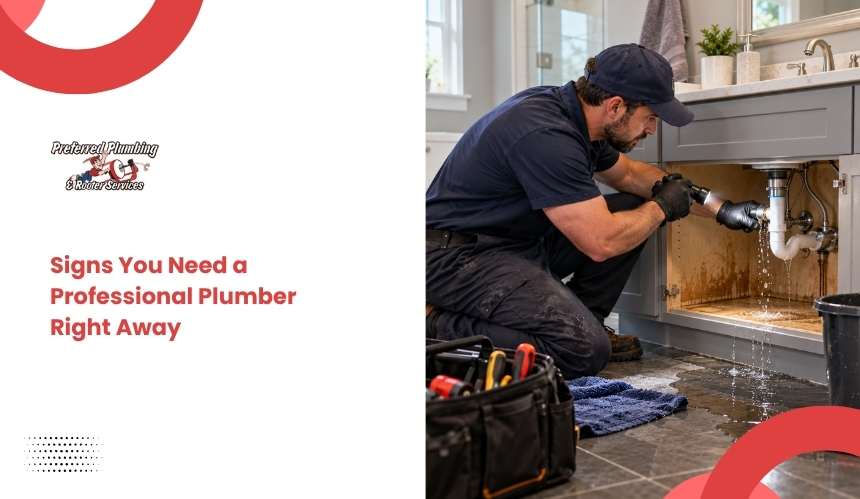
Signs You Need a Professional Plumber Right Away
Plumbing problems rarely stay small for long. What starts as a slow drip under the sink or a faint gurgle in the drain can quickly escalate into a burst pipe, a flooded bathroom, or thousands of dollars in water damage. Knowing the difference between a minor annoyance and a genuine plumbing emergency can save your home, your budget, and your sanity.
At Preferred Plumbing and Rooter Services, we’ve responded to countless calls from homeowners who wish they had reached out sooner. This guide walks through the most common warning signs that indicate it’s time to stop troubleshooting on your own and call in a licensed professional right away.
Warning Signs of a Plumbing Emergency
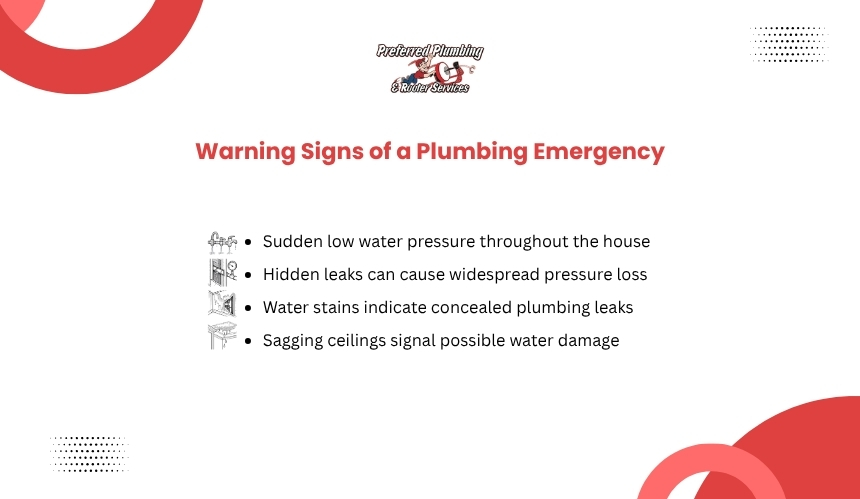
Some plumbing issues announce themselves loudly, while others creep up quietly until the damage is already done. Learning to recognize both types is the first step toward protecting your home.
Low Water Pressure Throughout the House
If every faucet in your home suddenly produces a weak trickle instead of a steady stream, you’re likely dealing with more than a clogged aerator. Widespread low pressure often points to a hidden leak, a failing pressure regulator, or mineral buildup restricting flow throughout your pipes. A plumber can pressure-test your system and pinpoint the source before it worsens into a pipe failure.
Water Stains or Sagging Ceilings
Brown or yellow stains on ceilings and walls, peeling paint, or a soft, sagging spot in drywall almost always mean water is leaking somewhere out of sight. By the time you notice visible staining, mold growth and structural damage may already be underway, which is why this sign calls for immediate professional attention rather than a wait-and-see approach.
Unusual Sounds and Smells From Your Pipes
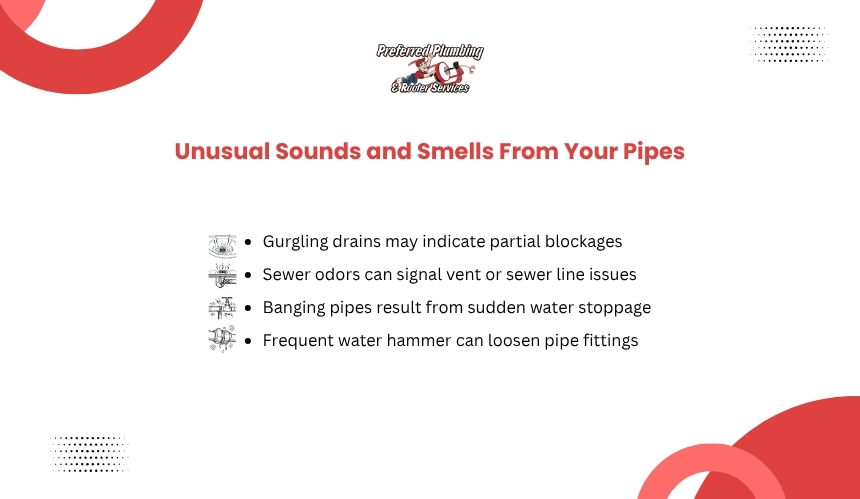
Your plumbing system communicates problems through sound and smell long before a visible leak appears. Paying attention to these subtle clues can help you catch issues while they’re still inexpensive to fix.
Gurgling Drains and Sewer Odors
A gurgling sound after you flush the toilet or run the dishwasher usually means air is trapped in the pipes because of a partial blockage further down the line. Combine that with a sewer-like smell near drains, and you may be looking at a vent stack issue or a sewer line clog that needs professional diagnosis, often with a camera inspection.
Banging or Rattling Pipes (Water Hammer)
A loud bang when you shut off a faucet or washing machine valve, known as water hammer, happens when water suddenly stops and sends a shockwave through the pipes. Occasional water hammer isn’t catastrophic, but frequent banging can loosen pipe fittings over time and lead to leaks at the joints if left unaddressed.
When a Clogged Drain Becomes a Bigger Problem
A single slow drain is often a simple fix, but multiple slow drains across your home at the same time is a red flag for a main sewer line blockage. In Pomona neighborhoods like Historic Southwest Pomona and parts of Phillips Ranch, where many homes were built decades ago with clay or cast-iron sewer laterals, tree root intrusion is one of the most common culprits. The expansive clay soil common throughout the San Gabriel Valley causes ground shifting that can crack aging pipes, giving roots an easy entry point. If plunging and store-bought drain cleaners aren’t solving the problem, a professional rooter service with hydro-jetting equipment is usually the only reliable solution.
DIY vs Professional Plumbing Repair: When to Call In Help
Plenty of minor plumbing tasks are perfectly fine to handle yourself, such as replacing a toilet flapper, tightening a loose faucet handle, or clearing a sink trap. The line gets crossed, however, when a repair involves the main water line, gas lines, water heaters, or anything requiring you to cut into a wall or slab. Attempting these repairs without proper licensing can void warranties, violate local plumbing codes, and in the case of gas lines, create a serious safety hazard.
Questions to Ask Before Attempting a Repair Yourself
Before reaching for a wrench, ask whether the issue involves standing water near electrical outlets, whether you smell gas, whether the fix requires shutting off the main water supply, and whether you have the correct tools and replacement parts on hand. If the answer to any of these raises doubt, it’s safer and often cheaper in the long run to call a licensed plumber than to risk a failed DIY attempt.
How Pomona's Climate and Older Homes Affect Your Plumbing
Local conditions play a bigger role in plumbing health than most homeowners realize. Pomona’s hot, dry summers followed by sudden seasonal rain can cause soil to expand and contract around underground pipes, stressing joints and connections that have been in the ground for 40 or 50 years. Many homes near Ganesha Park and the Arts Colony area still have original galvanized steel plumbing, which corrodes internally over time and restricts water flow long before a visible leak appears.
Hard Water and Its Effect on Pipes and Water Heaters
Much of the water supplied throughout the Pomona Valley is considered moderately hard, meaning it carries a higher mineral content that gradually builds up inside pipes, faucets, and water heater tanks. This buildup is a common reason behind reduced hot water output, strange popping sounds from the water heater, and premature appliance failure, and it’s a strong sign that a professional inspection and possible flush or softener installation is overdue.
If you’re noticing any of these warning signs in your home, don’t wait for the problem to get worse. Preferred Plumbing and Rooter Services proudly provides a full range of plumbing and drain services throughout the region, helping homeowners resolve issues quickly, safely, and affordably before they turn into costly emergencies.
Frequently Asked Questions
How do I know if a plumbing issue is actually an emergency?
Signs of a true plumbing emergency include active flooding, no water pressure anywhere in the home, a strong gas or sewage smell, or water heater leaks near electrical components. If stopping the water supply at the main shutoff doesn’t resolve the immediate danger, it’s time to call an emergency plumber right away.
What should I do while waiting for a plumber to arrive?
Shut off the water at the main valve to limit damage, turn off electricity to any affected areas if water is near outlets, and move valuables away from the leak. Avoid using drain cleaners on a suspected sewer line issue, since harsh chemicals can complicate the repair.
Can a small leak really cause serious damage if I ignore it?
Yes. Even a slow, steady drip can waste hundreds of gallons of water a month and create ideal conditions for mold growth within 24 to 48 hours. Hidden leaks behind walls or under floors are especially dangerous because they often go unnoticed until structural damage has already occurred.
How often should I have my plumbing inspected?
Most plumbers recommend a whole-home inspection every one to two years, with more frequent checks for homes over 30 years old or those with a history of root intrusion or hard water buildup, both of which are common concerns for older Pomona properties.
Why does my water smell or taste different all of a sudden?
A sudden change in water smell or taste can indicate bacteria buildup in your water heater, corroding pipes, or a problem with the municipal supply line. If flushing your faucets doesn’t resolve it within a day, a plumber can test your water and inspect your system for underlying issues.
Is it worth repairing an old sewer line or should I replace it?
It depends on the extent of the damage. Minor cracks or isolated root intrusion can often be repaired with trenchless methods, but a pipe with widespread corrosion, multiple collapse points, or repeated backups is usually more cost-effective to replace, since repeated repairs add up quickly over time.