- perferred
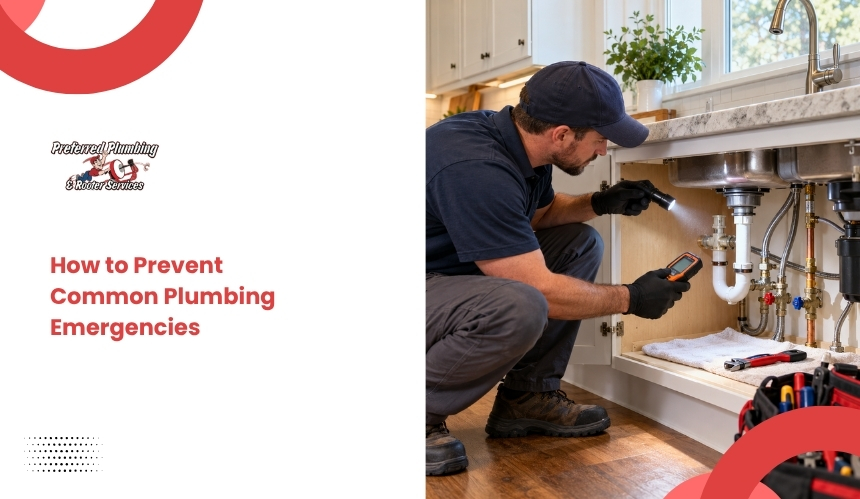
How to Prevent Common Plumbing Emergencies
A burst pipe at midnight or a sewer backup right before a family gathering is never convenient, and in most cases, it’s also preventable. Plumbing emergencies rarely happen out of nowhere — they’re usually the result of small warning signs that went unnoticed for months or even years.
At Preferred Plumbing and Rooter Services, we’ve responded to enough late-night calls across Pomona to know that most emergencies share a handful of root causes. This guide walks through what actually causes plumbing failures, how to spot trouble early, and the maintenance habits that keep your home’s plumbing system running smoothly year-round.
Why Plumbing Emergencies Happen More Often Than You Think
Plumbing systems are built to last for decades, but they’re not maintenance-free. Pipes corrode, seals wear down, and debris accumulates slowly inside drain lines long before you notice a drip or a slow drain. By the time water is pooling under a sink or backing up into a tub, the underlying problem has often been developing for a long time.
Understanding what triggers these failures — and recognizing early symptoms like gurgling drains, fluctuating water pressure, or musty odors — gives homeowners a real chance to intervene before a minor issue becomes a flooded bathroom or a collapsed sewer line.
What Causes Most Residential Plumbing Emergencies?
The majority of emergency plumbing calls we receive fall into a few predictable categories. Knowing what to look for is the first step toward prevention.
Aging Pipes and Outdated Materials
Homes built before the 1970s, including many of the older properties in Pomona’s Historic Arts Colony and Lincoln Park neighborhoods, often still have galvanized steel or original cast iron plumbing. These materials corrode from the inside out, narrowing pipe diameter and eventually leading to leaks or complete pipe failure. If your home is several decades old and has never had a plumbing inspection, this is one of the highest-risk factors for a sudden emergency.
Tree Root Intrusion in Sewer Lines
Pomona’s mature street trees and the clay-heavy soil common throughout the San Gabriel Valley create ideal conditions for roots to seek out moisture — and sewer lines are a prime target. Even a hairline crack in a clay or older PVC sewer pipe can be enough for roots to work their way in, eventually causing a full blockage or pipe collapse. Homes near established, tree-lined streets should have sewer lines scoped every few years.
Hard Water Buildup
Much of Pomona’s water supply runs moderately hard, which means mineral deposits gradually build up inside pipes, water heaters, and fixtures. Over time, this reduces water flow, strains your water heater, and accelerates wear on valves and faucets. Left unaddressed, scale buildup is a common contributor to sudden water heater failures and pipe blockages.
How to Prevent a Burst Pipe or Water Leak
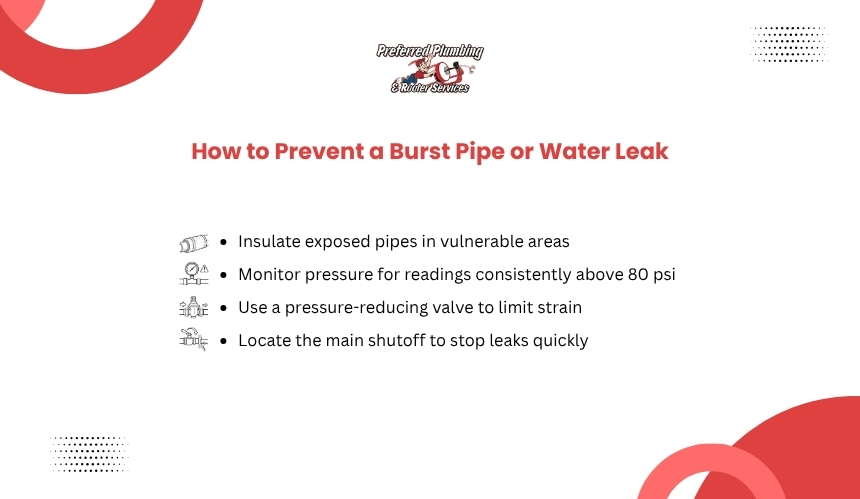
Burst pipes are among the most damaging plumbing emergencies because they can release hundreds of gallons of water in a short time. A few preventive habits go a long way toward avoiding them.
Insulate exposed pipes in garages, crawl spaces, and exterior walls, especially if you own an older property where pipe insulation may be minimal or missing entirely. Keep an eye on your home’s water pressure — anything consistently above 80 psi puts excess strain on pipes, fittings, and appliance connections. A pressure-reducing valve is an inexpensive fix that protects your entire plumbing system. Finally, know the location of your main water shutoff valve so that if a leak does occur, you can stop the flow of water immediately rather than waiting for help to arrive.
Simple Habits That Prevent Clogged Drains and Sewer Backups
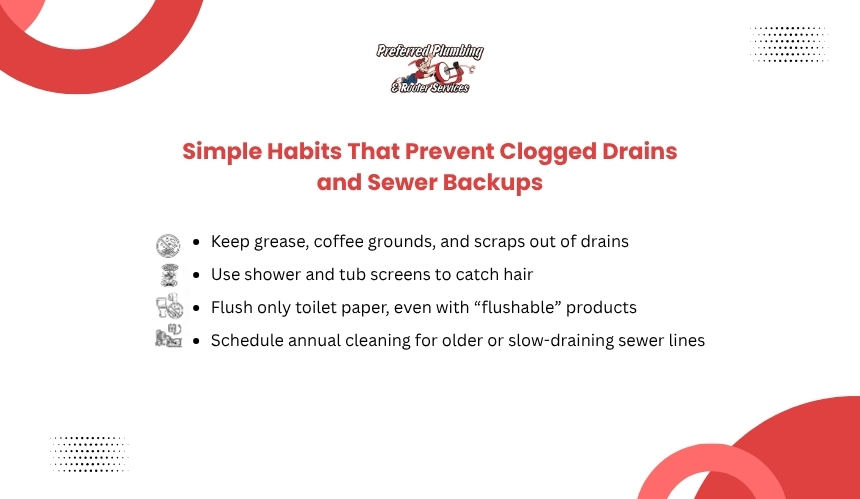
Clogged drains and sewer backups are almost always preventable with a little consistency. Avoid pouring grease, coffee grounds, or food scraps down kitchen drains, and use drain screens in showers and tubs to catch hair before it builds up in the pipe. In the bathroom, only flush toilet paper — wipes, paper towels, and hygiene products are a leading cause of sewer line blockages, even when labeled ‘flushable.’
For homes with older sewer lines or a history of slow drains, scheduling a professional drain cleaning or hydro-jetting service once a year can clear out buildup before it becomes a full blockage, saving you from the inconvenience and expense of an emergency rooter call.
Seasonal Plumbing Maintenance Tips for Southern California Homes
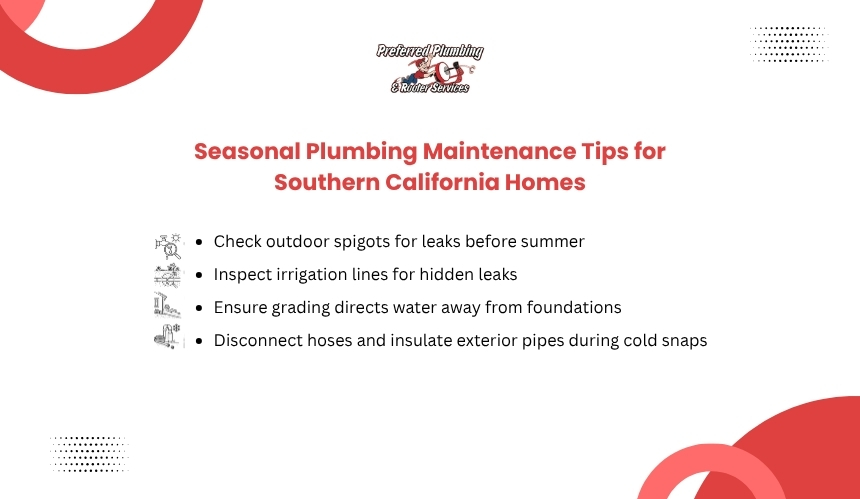
While Pomona doesn’t deal with harsh winters, the region’s hot, dry summers and occasional cold snaps still put specific stress on home plumbing. Before summer heat arrives, check outdoor spigots and irrigation lines for leaks, since dry soil conditions can mask slow leaks until they’ve caused real damage underground. In neighborhoods like Phillips Ranch, where many homes sit on sloped lots, it’s worth checking that grading and drainage are directing water away from your foundation rather than toward it.
During the rare cold snaps in late December and January, disconnect garden hoses and insulate any exposed exterior pipes to prevent freezing, which is still a seasonal risk for homes at Pomona’s higher elevations.
When to Call a Professional Plumber vs DIY Fixes
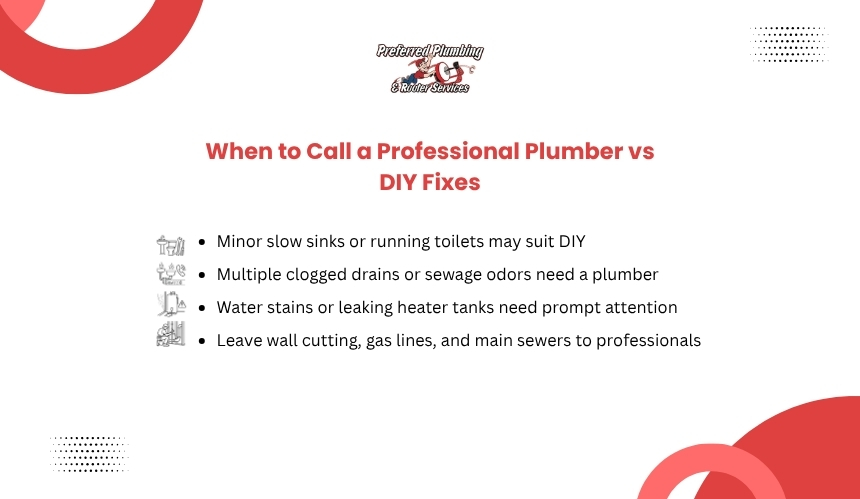
Minor issues like a slow bathroom sink or a running toilet are often fine to troubleshoot yourself. But certain warning signs call for a licensed plumber right away: multiple drains clogging at once, sewage odors, visible water stains on walls or ceilings, or a water heater that’s leaking from the tank itself. These symptoms usually point to a larger issue in the main line or system that DIY tools can’t resolve and may make worse if handled incorrectly.
A good rule of thumb: if a fix requires cutting into a wall, working on gas lines, or involves the main sewer line, it’s time to call a professional rather than risk turning a repair into an emergency.
Preventing plumbing emergencies starts with regular inspections and catching small problems early — and Preferred Plumbing and Rooter Services is proud to provide these services and a full range of plumbing solutions throughout Pomona and the surrounding region. Contact us today to schedule a plumbing inspection and keep your home’s system running smoothly all year long.
Frequently Asked Questions
How often should I have my plumbing system inspected?
Most homes benefit from a professional plumbing inspection once a year. Older homes, or those with a history of leaks or slow drains, may benefit from inspections every six months to catch developing issues early.
What are the warning signs of a hidden water leak?
Unexplained increases in your water bill, a water meter that keeps running when no fixtures are in use, musty odors, and soft or discolored spots on walls, floors, or ceilings are all common signs of a hidden leak.
How much does emergency plumbing repair typically cost compared to routine maintenance?
Emergency repairs, especially those involving water damage or after-hours service, are almost always significantly more expensive than routine maintenance like drain cleaning or an annual inspection, which is why prevention tends to save homeowners money over time.
Can tree roots really damage a sewer line that's not cracked?
Yes. Roots are drawn to moisture and can enter through small joints, seams, or tiny existing cracks in a sewer pipe, then expand over time and cause significant blockages or structural damage even if the pipe looked intact initially.
Is it worth installing a water softener to prevent plumbing issues?
In areas with moderately hard water, a water softener can reduce mineral buildup inside pipes and appliances, extending the life of your water heater and fixtures. It’s a worthwhile investment for homeowners dealing with frequent scale-related issues.
What should I do immediately if a pipe bursts in my home?
Shut off the main water valve immediately to stop the flow of water, then turn off electricity to any affected areas if water is near outlets or fixtures. Once the water is off, call a licensed plumber right away to assess and repair the damage.