- perferred
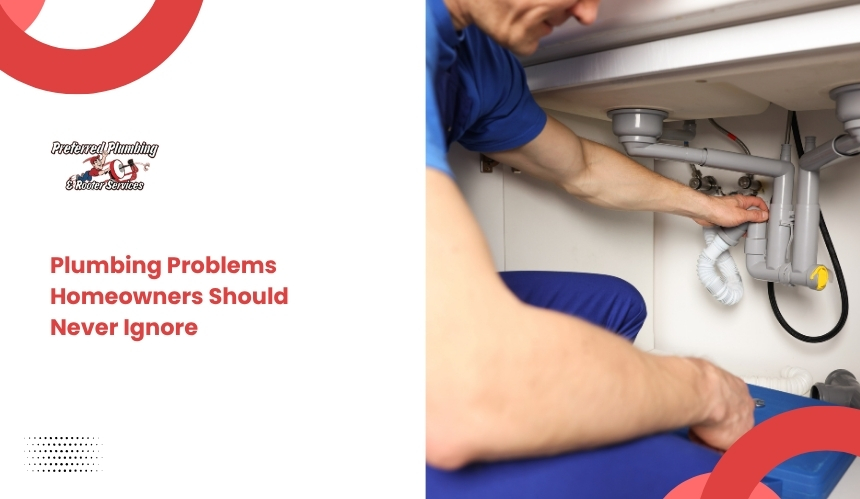
Plumbing Problems Homeowners Should Never Ignore
Most plumbing emergencies don’t start as emergencies. They start as a faint drip under the sink, a slow drain, or a water bill that’s a little higher than usual. By the time a pipe actually bursts or a ceiling collapses from water damage, the warning signs have usually been there for weeks or even months.
At Preferred Plumbing and Rooter Services, we’ve walked into countless Charlotte-area homes where a $150 repair could have prevented a $5,000 disaster. This guide walks through the plumbing problems that homeowners too often brush off, why they escalate quickly, and how to know when it’s time to stop waiting and call a professional.
Why 'Minor' Plumbing Issues Rarely Stay Minor
Plumbing systems are interconnected, which means a small problem in one area often puts stress on the rest of the system. A slow leak doesn’t just waste water; it can weaken subflooring, feed mold growth behind walls, and corrode fittings that were otherwise fine. A partially clogged drain doesn’t just smell bad; it puts backpressure on your pipes that can eventually force sewage backward into your home.
The cost of ignoring a plumbing issue almost always compounds over time. What starts as a simple fix becomes a multi-trade repair involving drywall, flooring, and even structural work once water has had time to spread.
Warning Signs That Mean It's Time to Call a Plumber
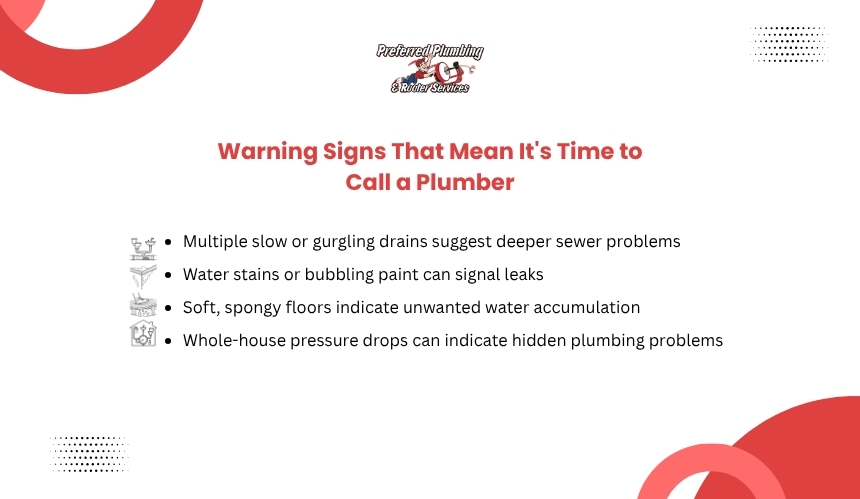
Some plumbing issues are obvious, like a pipe that’s actively spraying water. Others are subtle and easy to explain away. Here are the signs that should move a plumbing call to the top of your to-do list.
Slow or Gurgling Drains
A single slow drain might just need a plunger. But if multiple drains in your home are slow, gurgling, or backing up at the same time, it usually points to a problem deeper in your main sewer line, not just the fixture itself. Tree root intrusion is a common culprit in Charlotte neighborhoods with mature tree canopies, such as Dilworth and Myers Park, where decades-old oaks have root systems that seek out the moisture inside clay and older PVC sewer lines.
Water Stains, Soft Spots, or Ceiling Discoloration
Brown or yellow rings on ceilings, bubbling paint, or soft, spongy spots on floors are signs that water has been accumulating somewhere it shouldn’t be, often for a long time before it becomes visible. These signs almost always indicate an active or recent leak and should never be treated as a cosmetic issue.
Fluctuating or Dropping Water Pressure
A sudden drop in water pressure, especially if it affects the whole house rather than a single fixture, can indicate anything from mineral buildup in old galvanized pipes to a hidden leak or a failing pressure regulator. Homes in older Charlotte neighborhoods like NoDa and Elizabeth, many of which still have original galvanized steel plumbing, are especially prone to this type of gradual pressure loss as pipes corrode from the inside out.
How Do I Know If I Have a Hidden Water Leak?
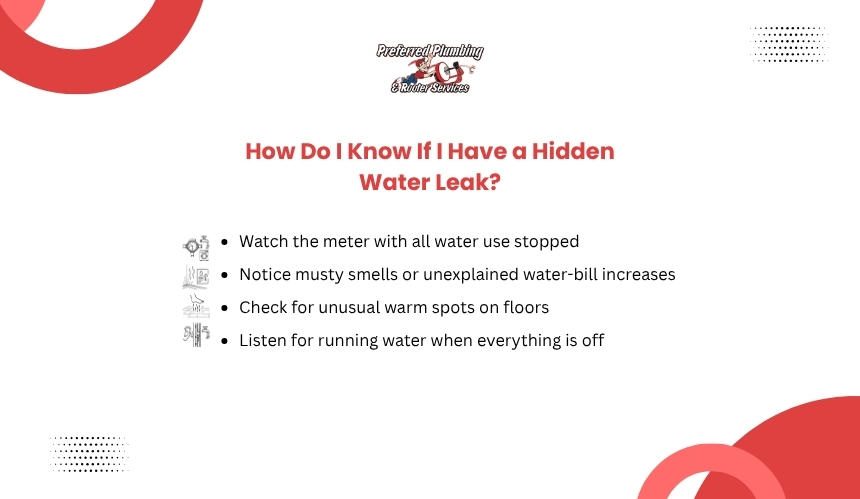
This is one of the most common questions homeowners search for, and for good reason: hidden leaks can run up water bills and cause damage for months before they’re discovered. Check your water meter, turn off every faucet and appliance in the house, and watch the meter for several minutes. If it’s still moving, water is escaping somewhere. Other clues include a musty smell in a specific room, unexplained increases in your water bill, warm spots on the floor (which can indicate a leaking hot water line), or the sound of running water when nothing is turned on. If you notice any of these, it’s worth scheduling a leak detection inspection rather than waiting to see if it gets worse.
Seasonal Plumbing Risks Homeowners Often Overlook
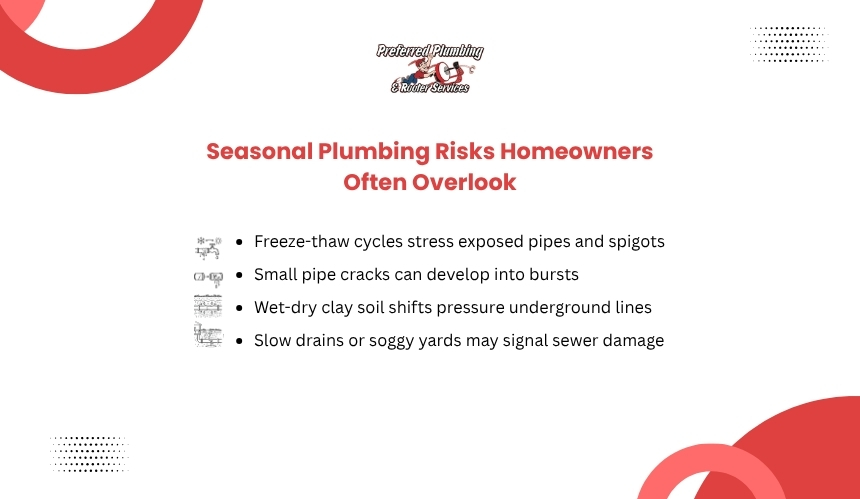
Plumbing problems aren’t just about old pipes and bad luck. Climate and seasonal shifts play a real role in what breaks and when. Charlotte’s freeze-thaw winters, where overnight temperatures can dip into the 20s before rebounding into the 50s by afternoon, put repeated stress on exposed pipes, outdoor spigots, and crawl space plumbing. That expansion and contraction cycle is a leading cause of small cracks turning into burst pipes.
Summer brings its own risks. Charlotte’s clay-heavy soil expands significantly when saturated by heavy summer storms and contracts during dry spells, a shift-and-settle pattern that puts ongoing pressure on underground sewer and water lines. Homeowners in newer developments around Ballantyne and Steele Creek, where homes often sit on compacted clay fill, should pay particular attention to slow drains or soggy patches in the yard, which can signal a shifting or cracked sewer line long before it becomes a visible backup indoors.
DIY vs. Professional Repair: When to Call In the Experts
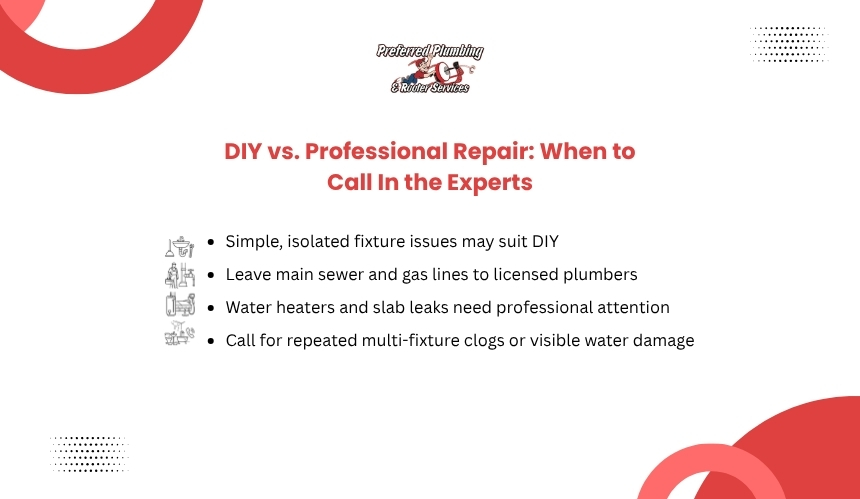
Not every plumbing issue requires a professional. Replacing a worn washer, unclogging a single slow drain with a plunger, or swapping out a showerhead are reasonable DIY projects. But certain problems are genuinely not worth the risk of a DIY attempt.
When DIY Makes Sense
Simple, isolated issues like a running toilet, a clogged single drain, or a loose faucet handle are typically safe for a confident homeowner to tackle with basic tools.
When to Call a Licensed Plumber
Anything involving your main sewer line, gas lines, water heater, slab leaks, repeated clogs across multiple fixtures, or visible water damage should go to a licensed plumber. These issues often require specialized equipment like sewer cameras and hydro-jetting tools, and mistakes can turn an affordable fix into a far more expensive repair.
If you’re noticing any of these warning signs in your home, don’t wait for a small problem to become a big one. Preferred Plumbing and Rooter Services provides a full range of residential and commercial plumbing services throughout the Charlotte region, from routine inspections and drain cleaning to emergency repairs, and we’re ready to help you protect your home before minor issues turn costly.
Frequently Asked Questions
How much water damage can a small leak actually cause?
Even a slow, steady drip can waste over 3,000 gallons of water a year and create enough moisture to grow mold within 24 to 48 hours. Left unaddressed, a small leak can rot subflooring, damage drywall, and weaken structural wood over time.
What does it mean if my toilet gurgles when the washing machine drains?
This is a classic sign of a partial blockage in your main sewer line. Because all your drains connect to the same line, a clog downstream can cause air and water to push back up through the nearest fixture, often the toilet, when another fixture drains.
How often should sewer lines be inspected in older homes?
Homes over 25 years old, or those with mature trees nearby, should have a sewer camera inspection every 1 to 2 years. This helps catch root intrusion or pipe deterioration before it causes a backup.
Can low water pressure fix itself over time?
No. Low water pressure is almost always caused by an underlying issue, such as mineral buildup, a hidden leak, or a failing pressure regulator, and these problems typically get worse rather than better without intervention.
Is it normal for pipes to make noise in cold weather?
Occasional ticking from expansion is normal, but banging, knocking, or whistling noises during cold snaps can indicate trapped air, high water pressure, or a pipe that’s close to freezing, all of which are worth having checked before temperatures drop further.
What's the difference between a plumbing emergency and something that can wait?
A true emergency involves active flooding, no water shutoff access, sewage backup, or a gas smell near plumbing appliances. Issues like a slow drain or a minor drip can typically wait for a scheduled appointment, though they shouldn’t be ignored indefinitely.