- perferred
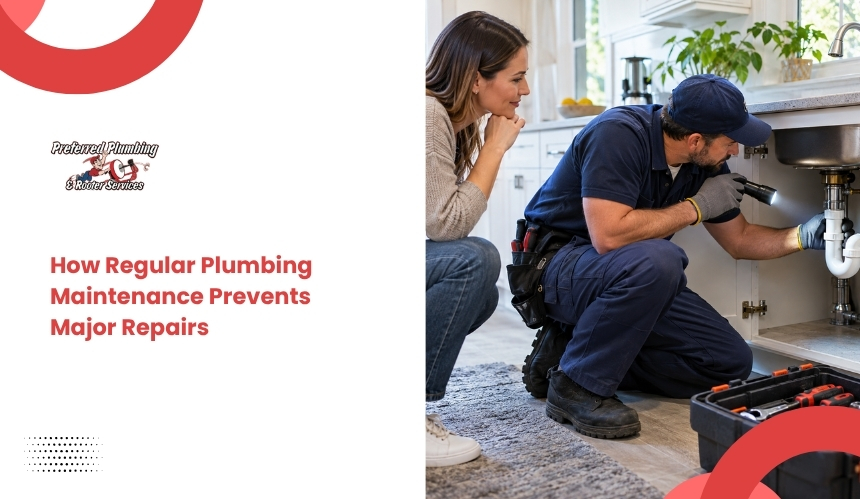
How Regular Plumbing Maintenance Prevents Major Repairs
Most homeowners only think about their plumbing system when something goes wrong, a backed-up drain, a dripping faucet, or worse, a burst pipe flooding the basement. By then, what could have been a simple fix has often turned into an expensive emergency. Regular plumbing maintenance is the single most effective way to avoid these costly surprises, catching small issues before they snowball into major repairs.
For homeowners in Charlotte, NC, where shifting clay soil, aging neighborhood infrastructure, and seasonal temperature swings all put extra strain on pipes, a proactive maintenance routine isn’t just a nice-to-have, it’s essential. This guide walks through why plumbing problems escalate, what routine maintenance actually involves, and how a small annual investment can save thousands in future repair costs.
Why Plumbing Problems Escalate Without Maintenance
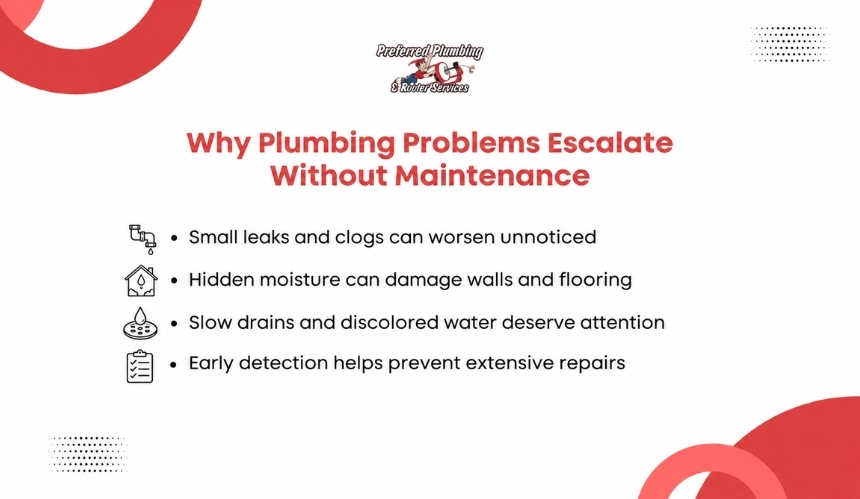
Plumbing systems rarely fail overnight. A pinhole leak in a copper pipe, a slow clog building in a drain line, or corrosion inside a water heater tank all start small and worsen gradually. Without regular inspection, these minor issues go unnoticed until they cause visible damage, water stains on ceilings, mold growth, warped flooring, or a complete pipe burst that floods a home in minutes.
The cost difference between catching a problem early and waiting until it becomes an emergency is significant. A minor leak repair might cost a few hundred dollars, while the water damage restoration from an undetected leak can run into the thousands, not counting the cost of the plumbing repair itself.
Common Warning Signs Homeowners Ignore
Slow drains, slightly discolored water, a faint sewage smell near floor drains, or a water bill that’s crept up without explanation are all early warning signs of a developing plumbing issue. Many homeowners dismiss these as minor annoyances rather than recognizing them as symptoms of a larger problem that routine maintenance would catch and resolve.
What Does Routine Plumbing Maintenance Include?
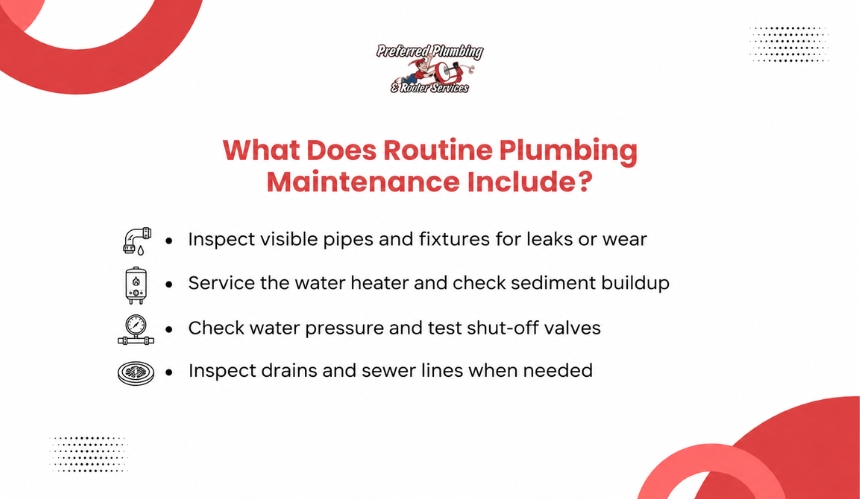
A thorough plumbing maintenance visit typically covers a full inspection of visible and accessible pipes, water heater flushing and inspection, drain line camera inspections where needed, checking water pressure, testing shut-off valves, and inspecting fixtures for leaks or wear. Technicians also look at sump pumps, sewer lines, and any exposed plumbing in crawl spaces or basements for signs of corrosion, condensation, or pest damage.
How Often Should You Schedule a Plumbing Inspection?
Most plumbing professionals recommend a full inspection once a year, with water heater maintenance performed annually as well to flush sediment buildup. Homes with older pipes, well water, or a history of plumbing issues may benefit from inspections every six months. If your home is more than 30 years old or has never had a professional plumbing inspection, scheduling one sooner rather than later is a smart move.
Plumbing Maintenance Challenges Specific to Charlotte, NC Homes
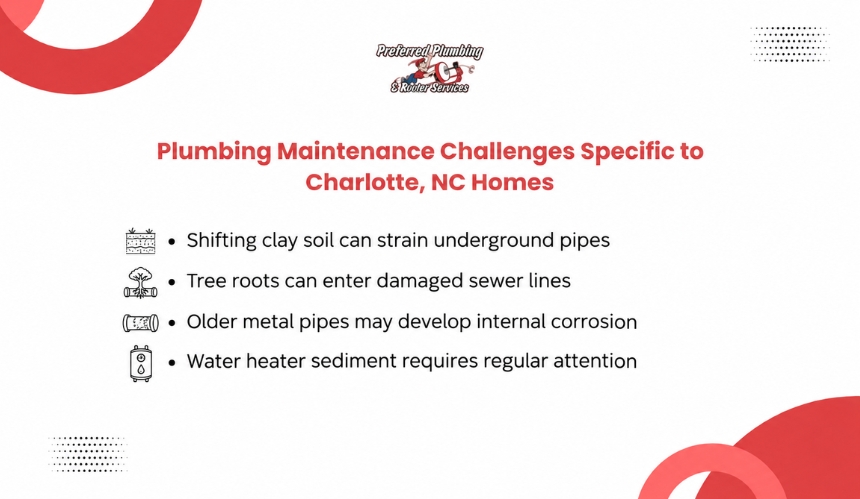
Charlotte’s clay-heavy soil, especially common in areas like Ballantyne and Steele Creek, expands and contracts significantly with seasonal moisture changes. This shifting soil puts constant pressure on underground sewer and water lines, making them more prone to cracking or developing root intrusion from mature trees over time. Routine sewer line inspections are particularly valuable for homeowners in these areas to catch shifting or root infiltration before it causes a full line collapse.
Older homes in neighborhoods such as Dilworth and Myers Park often still have original galvanized steel or cast iron piping, which corrodes from the inside out over decades. A camera inspection during a maintenance visit can reveal internal corrosion long before a pipe fails. Additionally, Charlotte’s municipal water, sourced largely from the Catawba River, carries moderate mineral content that contributes to sediment buildup in water heaters, making annual flushing especially important for extending appliance lifespan.
Maintenance vs. Emergency Repair: Which Costs More?
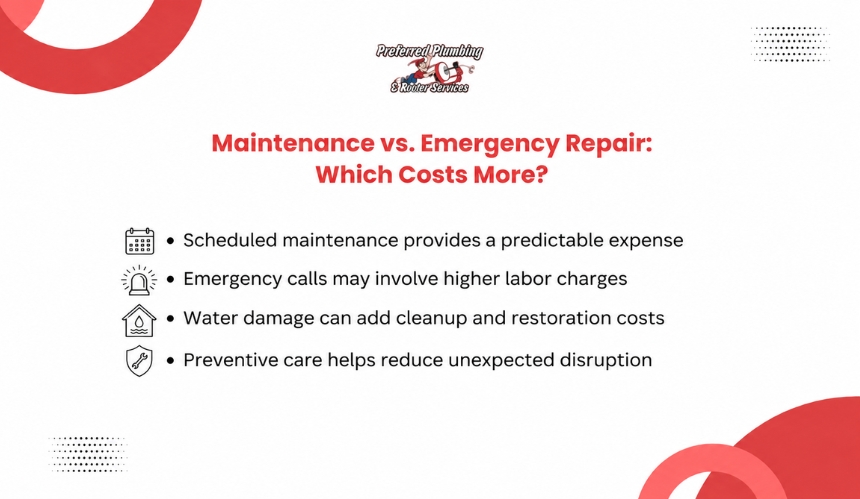
When comparing scheduled maintenance to emergency repair, the numbers make a strong case for prevention. A routine plumbing inspection and maintenance visit is a modest, predictable expense. An emergency after-hours call for a burst pipe or sewer backup, on the other hand, often comes with higher labor rates, the cost of the repair itself, and frequently the added expense of water damage cleanup or drywall and flooring replacement.
Beyond the dollar amount, emergency repairs also come with the stress of unexpected scheduling, temporary loss of water service, and the inconvenience of having to find a plumber on short notice. Maintenance keeps repairs predictable and lets homeowners budget for plumbing care rather than scrambling to cover a surprise bill.
Simple Maintenance Tasks Homeowners Can Do Between Professional Visits
While a licensed plumber should handle annual inspections and anything involving gas lines or sewer connections, homeowners can take several simple steps between visits. Regularly check under sinks for moisture or mineral deposits, test water pressure with a simple gauge, clean faucet aerators to maintain flow, and avoid pouring grease or coffee grounds down kitchen drains. During colder winter stretches, insulating exposed pipes in crawl spaces or garages helps prevent freezing, which is a real risk during Charlotte’s occasional hard freezes even though the region generally has mild winters.
Keeping an eye on water bills for unexplained spikes and listening for running water sounds when no fixtures are in use can also help homeowners catch hidden leaks early, before they require major intervention.
Preferred Plumbing and Rooter Services proudly offers a full range of plumbing maintenance and repair services for homeowners throughout Charlotte, NC, and the surrounding region, helping you catch small issues before they turn into costly emergencies.
Frequently Asked Questions
How much does a plumbing maintenance inspection typically cost?
A standard annual plumbing inspection generally costs far less than a single emergency repair call, and many plumbing companies offer maintenance plans or bundled service visits that make routine care even more affordable over time.
What are the first signs that a pipe is about to burst?
Watch for sudden drops in water pressure, discolored or rusty water, unusual banging or knocking sounds in the walls, and damp spots on walls, ceilings, or floors. Any of these signs warrant a prompt inspection before the pipe fails completely.
Is it worth getting a camera inspection of my sewer line?
Yes, especially for homes over 20 years old or those with mature trees nearby. A camera inspection can reveal root intrusion, cracks, or sagging sections long before they cause a backup, and it’s one of the most valuable tools in preventive sewer maintenance.
How often should a water heater be flushed?
Most water heaters should be flushed once a year to remove sediment buildup, which improves efficiency and extends the unit’s lifespan. Homes with harder water or heavy usage may benefit from flushing twice a year.
Can regular maintenance really prevent a major plumbing emergency?
In most cases, yes. The majority of major plumbing failures, like burst pipes or sewer backups, are preceded by gradual warning signs such as slow drains, small leaks, or corrosion that a trained plumber can identify and address during routine maintenance.
Should I still schedule maintenance if my plumbing seems fine?
Absolutely. Many plumbing problems develop out of sight, inside walls, underground, or within a water heater tank, so a system can seem fine on the surface while a larger issue is quietly developing. Scheduled maintenance catches these hidden problems early.