- perferred
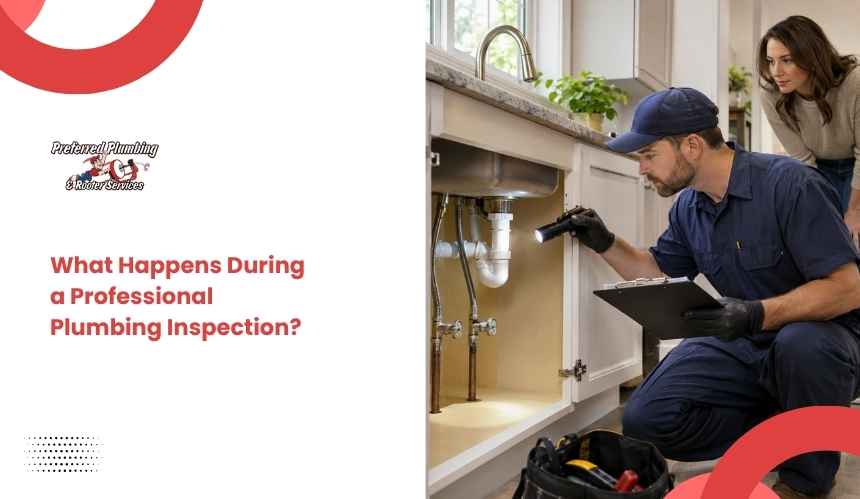
What Happens During a Professional Plumbing Inspection?
If you’ve never had a professional plumbing inspection, the process can feel like a mystery. Will the plumber tear into your walls? Will it take all day? The good news is that a standard plumbing inspection is non-invasive, methodical, and designed to catch small issues before they become expensive emergencies.
At Preferred Plumbing and Rooter Services, we perform plumbing inspections for homeowners throughout Charlotte, NC every week, from century-old bungalows near South End to newer builds in suburban subdivisions. This guide walks through exactly what happens during a professional inspection, how long it takes, and why scheduling one proactively can save you thousands of dollars down the road.
Why Schedule a Plumbing Inspection
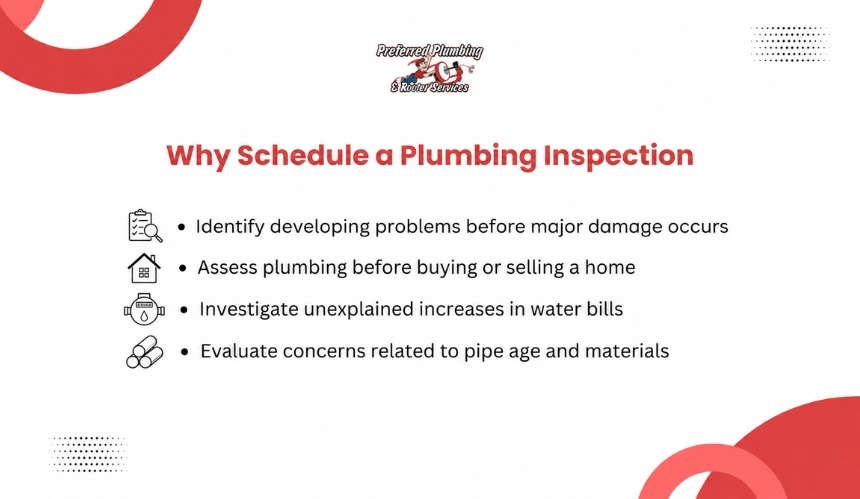
Most homeowners only think about their plumbing when something breaks, but a proactive inspection catches problems while they’re still cheap and easy to fix. Whether you’re buying a home, preparing to sell, dealing with a sudden spike in your water bill, or simply haven’t had your system checked in a few years, an inspection gives you a clear picture of your plumbing’s health from the water main to the fixtures.
This is especially important in Charlotte, where many neighborhoods feature a mix of homes built across several decades. A 1940s home in Plaza Midwood may still have original galvanized supply lines, while a newer home in Ballantyne might be dealing with PEX or PVC systems that have their own set of common issues. A trained plumber knows what to look for based on your home’s age, materials, and location.
What a Licensed Plumber Checks During an Inspection
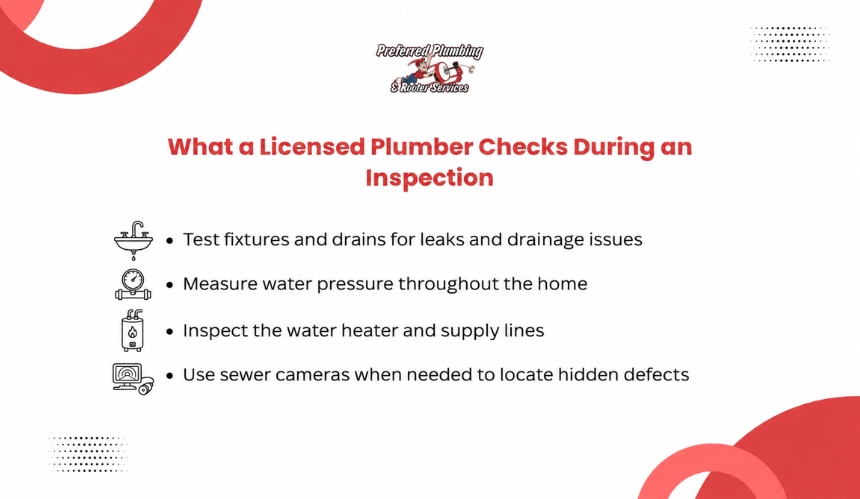
A thorough plumbing inspection covers far more than just checking for obvious leaks. Our technicians work through a detailed checklist that covers every major component of your home’s water and drainage systems, inside and out.
Fixtures, Drains, and Water Pressure
The inspection typically starts at your fixtures. We test every sink, toilet, tub, and shower for proper drainage, checking for slow drains, gurgling sounds, or signs of hidden leaks around seals and connections. We also measure water pressure throughout the house, since unusually high pressure can stress pipes and appliances over time, while low pressure can point to a clog, a corroded pipe, or a problem with the municipal supply line.
Water Heater and Supply Lines
Next, we inspect the water heater, checking the tank for rust, sediment buildup, corrosion, and proper temperature and pressure relief valve function. We also check the age of the unit, since most tank water heaters last 8-12 years before needing replacement. Supply lines throughout the home are checked for material type, corrosion, and any signs of pinhole leaks, which are more common in homes with older copper piping.
Sewer Line and Main Drain Camera Inspection
For a complete picture, many inspections include a camera inspection of the main sewer line. This is particularly valuable in older Charlotte neighborhoods like Dilworth and NoDa, where mature tree roots frequently work their way into clay or cast-iron sewer pipes, and Charlotte’s reddish clay soil can shift slightly with seasonal moisture changes, putting added stress on underground lines. A camera lets us see cracks, blockages, bellies, or root intrusion without digging up your yard.
How Long Does a Plumbing Inspection Take?
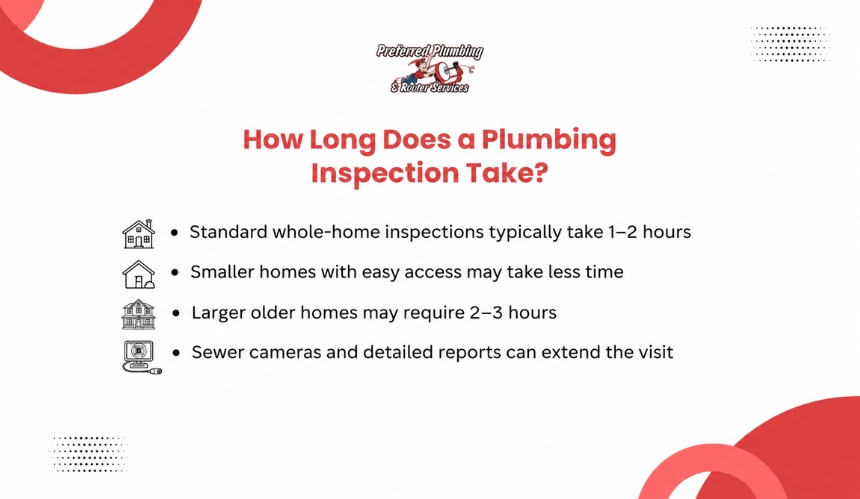
Most standard whole-home plumbing inspections take between 1 and 2 hours, depending on the size of the house and the age of the plumbing system. A smaller condo or newer home with easy access to fixtures and the water heater may take closer to an hour, while a larger older home with multiple bathrooms, a crawl space, and a sewer camera inspection can take 2 to 3 hours. Real estate transaction inspections, which often require a more detailed written report for buyers or sellers, may take a bit longer to complete and document thoroughly.
Signs You Need an Inspection Sooner Rather Than Later
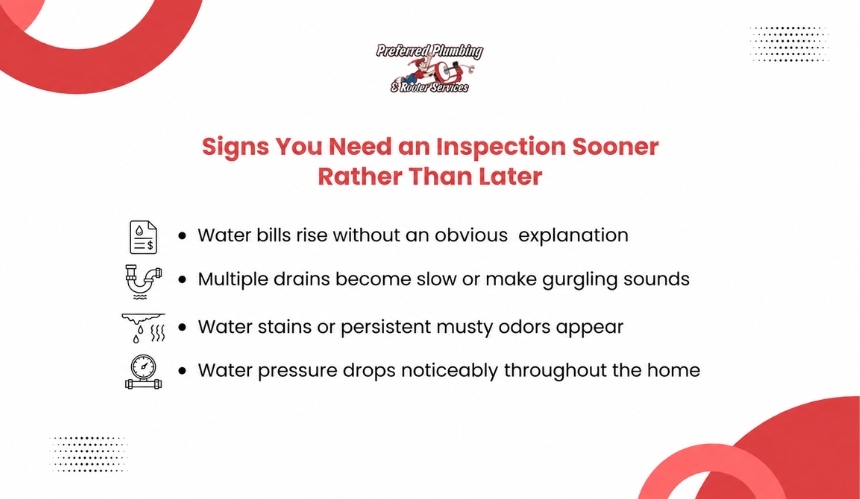
While routine inspections every 1-2 years are a smart habit, certain warning signs mean you shouldn’t wait. Watch for a sudden increase in your water bill with no obvious explanation, slow or gurgling drains in multiple fixtures at once, water stains on ceilings or walls, a persistent musty odor in the basement or crawl space, or noticeably low water pressure throughout the house.
Charlotte’s humid summers can also accelerate hidden issues, since excess moisture around slab foundations and crawl spaces makes it easier for small leaks to go unnoticed until mold or structural damage develops. If you’ve noticed any of these signs, it’s worth scheduling an inspection sooner rather than later.
Plumbing Inspections vs. Plumbing Repairs: What's the Difference
It’s common for homeowners to confuse an inspection with a repair call, but they serve different purposes. An inspection is diagnostic: a plumber evaluates your entire system, identifies current and potential problems, and provides a written assessment with recommendations. A repair visit, by contrast, addresses a specific known issue, such as a leaking faucet or a clogged drain.
Many homeowners choose to schedule an inspection first, especially when buying or selling a home, so they have a clear understanding of what repairs (if any) are actually needed before committing to a service. This approach often saves money by avoiding unnecessary work and helps prioritize which repairs are most urgent.
If it’s been a while since your plumbing system was professionally evaluated, Preferred Plumbing and Rooter Services offers thorough plumbing inspections and a full range of plumbing services for homeowners throughout the Charlotte region. Contact us today to schedule an appointment and get a clear, honest picture of your home’s plumbing health.
Frequently Asked Questions
How often should I get my plumbing inspected?
Most plumbers recommend a full inspection every 1-2 years for homes under 20 years old, and annually for older homes or properties with known issues like galvanized or cast-iron piping. Homes near mature trees or with a history of sewer line problems may benefit from more frequent camera inspections.
Does a plumbing inspection include the sewer line?
A basic inspection covers visible fixtures, pipes, and the water heater, but a sewer camera inspection is usually offered as an add-on or recommended separately, especially for older homes or homes with a history of slow drains or backups.
How much does a plumbing inspection cost?
Costs vary based on home size and whether a sewer camera inspection is included, but homeowners can generally expect a standard whole-home inspection to be a modest, worthwhile investment compared to the cost of an unexpected emergency repair or undetected leak.
Is a plumbing inspection required when buying a house?
While not always legally required, a plumbing inspection is strongly recommended during a home purchase, particularly for older properties. It can reveal issues like outdated piping materials, hidden leaks, or sewer line damage that might not be caught in a general home inspection.
What's the difference between a home inspection and a plumbing inspection?
A general home inspector checks plumbing at a basic level as part of a broader property review, but a licensed plumber performs a much more detailed evaluation, including water pressure testing, water heater assessment, and often a camera inspection of the sewer line.
Can a plumbing inspection help lower my water bill?
Yes. Inspections frequently uncover hidden leaks in toilets, supply lines, or underground pipes that waste water silently for months. Identifying and repairing these leaks can noticeably reduce a high water bill.